Word of the week: Thinking
Word of the week: Thinking
The quiet skill that shapes our lives
We think all day long. Constantly. Automatically. Non-stop. Yet we rarely stop to think about… thinking.
Our thoughts run in the background like music in a shop. Always playing. Sometimes helpful. Sometimes dramatic. Occasionally wildly unhelpful.
But here’s the powerful truth:
The quality of our lives is deeply connected to the quality of our thinking.
What is thinking, really?
Thinking is more than worrying. More than over-analysing. More than replaying conversations from 2007 at 2am.
Real thinking is intentional. It is curious. It is reflective.
It asks questions like:
Why do I feel this way?
What am I assuming?
Is this thought helpful?
What else could be true?
Thinking is not the same as having thoughts It is the skill of examining them. And this skill changes everything.
The difference between automatic thoughts and intentional thinking
Our brains are designed for efficiency, not accuracy. They love shortcuts.
So, we develop automatic thought patterns:
Jumping to conclusions
Assuming the worst
Comparing ourselves to others
Replaying mistakes
Predicting problems that don’t exist yet
This is normal. Human. Universal. But when we never question these thoughts, they quietly shape our emotions, our reactions, and our decisions.
Intentional thinking creates space between:
What happens → What we think → How we respond
And in that space, we find choice.
Why thinking matters in everyday life
We often believe circumstances create our stress. But very often, it is our interpretation of circumstances.
Two people can experience the same situation:
One sees failure.
One sees feedback.
Same event. Different thinking. Different experience.
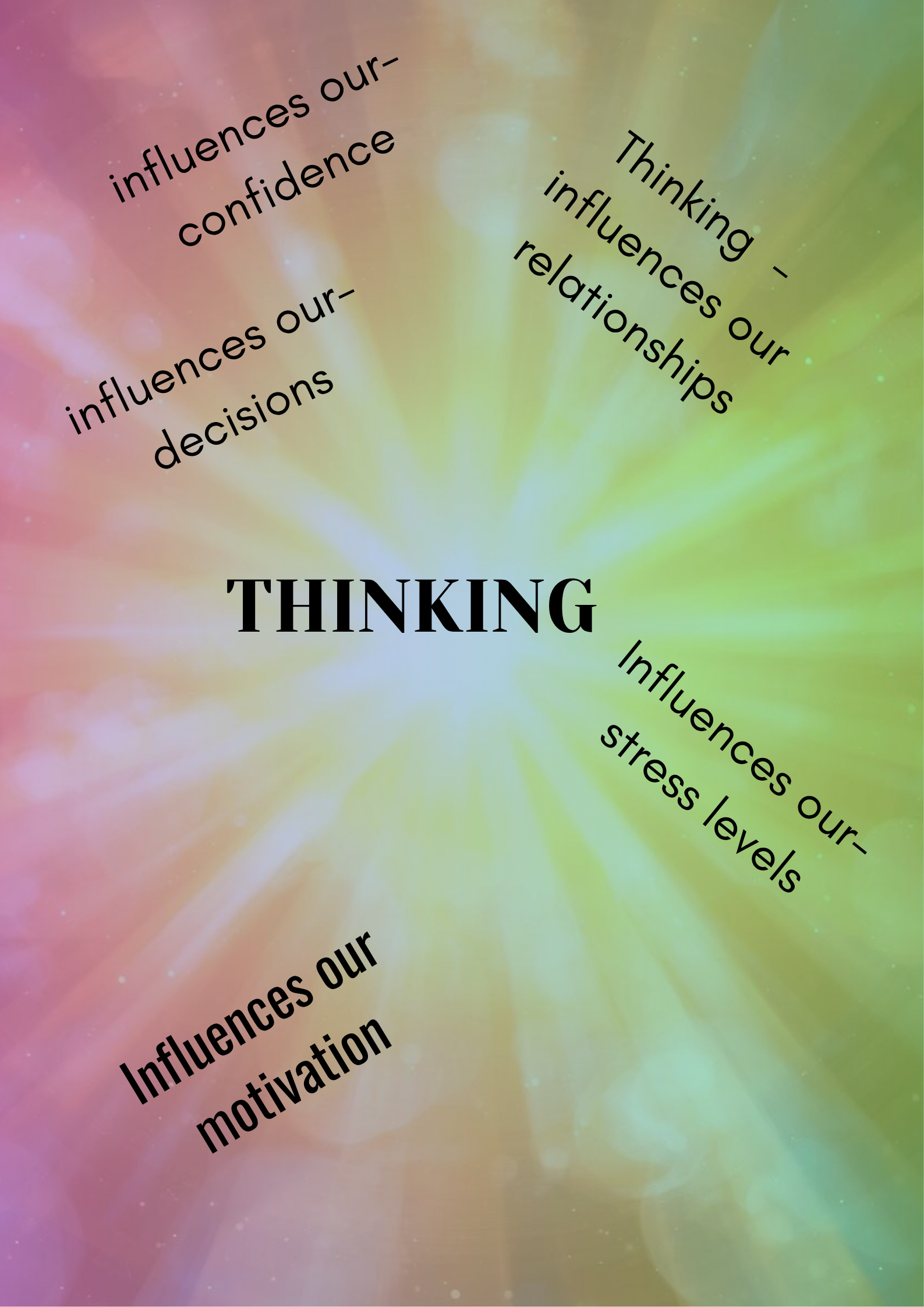
Thinking influences:
our confidence
our relationships
our stress levels
our motivation
our decisions
In many ways, thinking becomes the lens through which we experience life.
And the beautiful part? We can gently adjust that lens.
Practising healthy thinking in small, easy ways
This isn’t about becoming a philosopher or overthinking everything.
It’s about becoming a gentle observer of your mind.
Small steps make a big difference.
1. Notice your thoughts without judging them
Start with awareness. Simply catch a thought and say:
“That’s interesting.”
“That’s a worry thought.”
“That’s a comparison thought.”
You don’t need to fix it. Just notice it. Awareness is the first step toward change.
2. Ask one curious question
When something upsets you, try asking:
What story am I telling myself right now?
Is there another way to see this?
What would I say to a friend in this situation?
Curiosity softens harsh thinking.
3. Create a daily thinking pause
Even two minutes helps.
A short pause to ask:
What went well today?
What challenged me?
What did I learn?
This turns daily life into quiet reflection.
4. Replace harsh self-talk with kinder language
Notice the difference:
“I messed everything up.” Vs “That didn’t go as planned — what can I learn?”
Thinking shapes self-compassion. And self-compassion builds resilience.
Thinking and emotional wellbeing
Unexamined thoughts can create unnecessary stress. But thoughtful reflection creates clarity.
Intentional thinking helps us:
respond instead of reacting
learn instead of blame
grow instead of staying stuck
It gives us distance from our worries and perspective on our challenges.
Not perfect thinking. Just gentler, wiser thinking.
A gentle reflection
Take a moment to consider:
What thoughts do I repeat often?
Are these thoughts helpful or harmful?
How would my days feel if my inner voice was kinder?
Where could I pause and reflect more?
We cannot control every thought. But we can learn to guide them.
Final thought
Thinking is a quiet superpower.
It shapes our perspective.
It influences our emotions.
It guides our decisions.
When we learn to think with awareness and kindness, we begin to experience life with more clarity and calm.