Mindfulness-How to Be Present… Without Falling Asleep in the Process
Word of the Week: Mindfulness
How to Be Present… Without Falling Asleep in the Process
If “mindfulness” makes you think of monks on mountains, silent retreats, or sitting cross-legged while your foot goes numb — take a deep breath. This week, we’re going for something far more human and far less intimidating.
Mindfulness simply means being here, fully, in this moment, instead of mentally sprinting ahead to next week’s to-do list or replaying yesterday’s embarrassing moments on repeat (don’t worry, we’ve all been there).
It’s not about becoming perfectly calm or achieving “inner zen.” Some days, mindfulness might look like taking three slow breaths before you answer a message. Other days, it’s noticing that you’re eating lunch standing up again and deciding to sit down like a civilised person.
Mindfulness is not a performance — it’s a gentle practice.
So… Why Mindfulness?
Because your mind, bless it, behaves like a toddler with a permanent sugar rush.
It jumps around, gets distracted, worries about nothing and everything, and occasionally screams for snacks.
Mindfulness gives your brain a moment to slow down, tidy itself up, and stop chasing imaginary disasters that haven’t even happened.
When you’re mindful, you:
Think more clearly
Feel less overwhelmed
Respond instead of reacting
Notice what you need
And enjoy life in small, meaningful bites
The Art of Paying Attention (In a Distracted World)
We scroll while we eat, reply while we walk, and worry while we sleep.
Mindfulness invites us to do one thing at a time — a shock, I know.
Try this:
The next time you drink tea or coffee, don’t multitask. Just drink it. Feel the warmth, notice the flavour, smell the aroma.
Congratulations — you’ve just been mindful without downloading an app or sitting in lotus position.
Small moments count. In fact, they matter more than the big, dramatic ones.
Mindfulness with a Side of Humour
Let’s be honest: your mind wanders. My mind wanders. Everyone’s mind wanders.
You may attempt a mindful moment and find yourself thinking:
“What am I cooking tonight?”
“Why does my dog look suspicious?”
“Should I have said that in the meeting?”
“Do birds have feelings?”
This is normal. The goal is not to stop wandering — it’s to notice that your thoughts took a little field trip… and kindly invite them back.
No judgment.
No shame.
Just gentle redirection.
(Like herding a friendly, slightly confused sheep.)
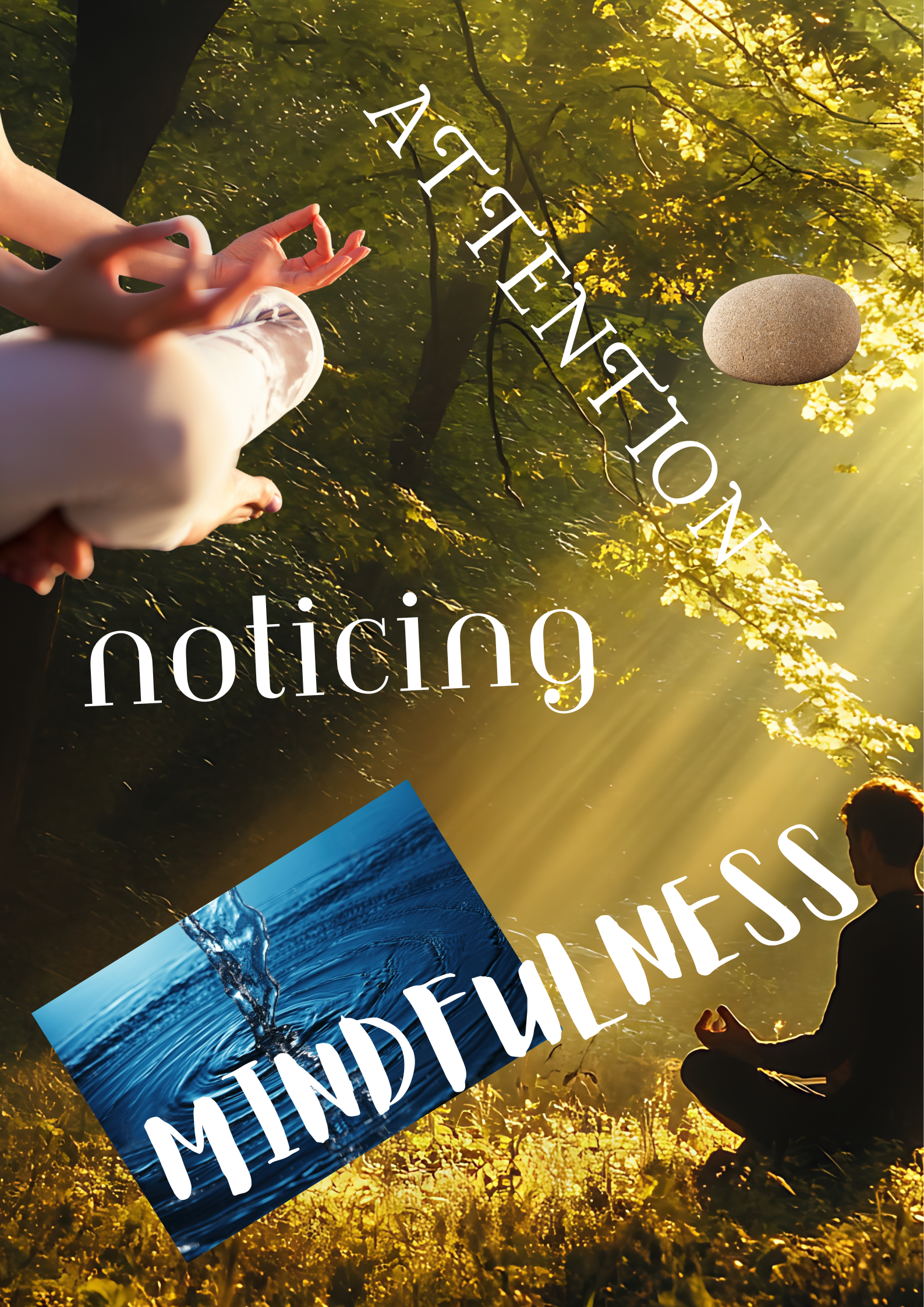
Mindfulness simply means being here, fully, in this moment.
Mindfulness Helps You Notice the Good Stuff
When you slow down enough to be present, small joys become BIG joys:
Sun on your shoulders
A comfortable silence with someone you love
The smell of early morning
A child laughing
The sound of rain
The simple pleasure of breathing… and realising you’re okay
Mindfulness opens your eyes to the beauty around you — the things that busyness often blinds you to.
Easy, Everyday Mindfulness Practices
You don’t need incense, chants, or a mountaintop view. Try these instead:
1. The 30-Second Breath Check
Pause. Inhale slowly. Exhale slowly.
Repeat twice. Instant reset.
2. Mindful Walking
Feel your feet step, notice the air, hear the sounds around you. Walk like you’re in the moment — not rushing through it.
3. Mindful Moments
Choose one daily activity — brushing teeth, making tea, washing dishes — and do it with full attention.
4. Micro Tech Breaks
Before you pick up your phone, ask: “Why am I checking this?”
Watch your habits shift.
5. Gratitude Glimpse
Notice one small, good thing today. Just one.
Your brain loves this.
A Gentle Closing Thought
Mindfulness is not about having a quiet mind — it’s about noticing your mind.
It’s about meeting yourself where you are, without judgment, without panic, and with a little more compassion.
Life becomes lighter, calmer, richer… not because everything is perfect, but because you’re finally present enough to experience it.