Part 3: Practical Pathways to learning
Living Your Best – Continual Learning & Personal Growth
Part 3: Practical Pathways to learning
Living Your Best is a reflection series exploring continual learning, personal growth, and emotional well-being.
In a fast-moving and often demanding world, it is easy to feel overwhelmed or uncertain about the direction of our lives. Yet growth does not come from dramatic life changes alone. It often begins quietly — with small shifts in our thinking, our habits, and the way we understand ourselves.
Each part of this series explores one aspect of personal development, offering reflections, practical ideas, and gentle encouragement for anyone seeking to live with greater purpose, balance, and confidence.
In Part 1, we explored the importance of lifelong learning and developing a growth mindset. Personal growth begins with the decision to keep learning, adapting and expanding our understanding of ourselves and the world.
In Part 2, we explored an invisible barrier to growth — self-doubt, those quiet internal voices that make us question our ability to change or try something new.
In Part 3, we turn our attention to something practical and hopeful: the many pathways through which we can continue learning throughout our lives.
What Do We Mean by Practical Pathways to Learning?
Learning is often associated with classrooms, textbooks, and exams. While formal education is valuable, it is only one pathway to learning.
In reality, learning happens everywhere.
Some learning is formal — structured courses, workshops, academic programs, or professional training.
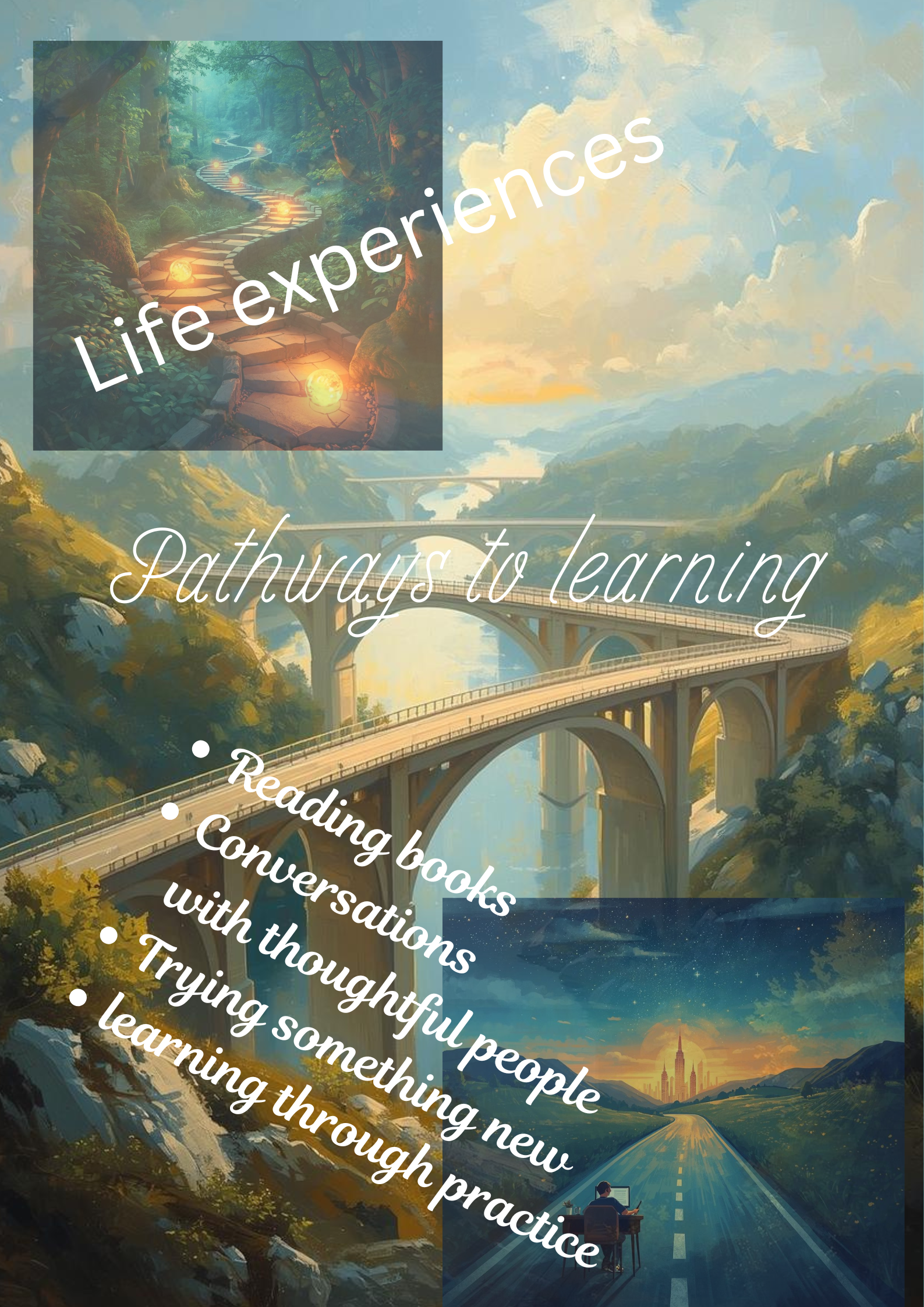
Other learning is informal — and often just as powerful. It happens through:
Reading books
Listening to podcasts
Conversations with thoughtful people
Mentorship and guidance
Personal reflection
Life experiences
Trying something new and learning through practice
For example, I am currently learning Portuguese. It stretches my brain, occasionally confuses my tongue, and reminds me that learning something new requires patience and a sense of humour!
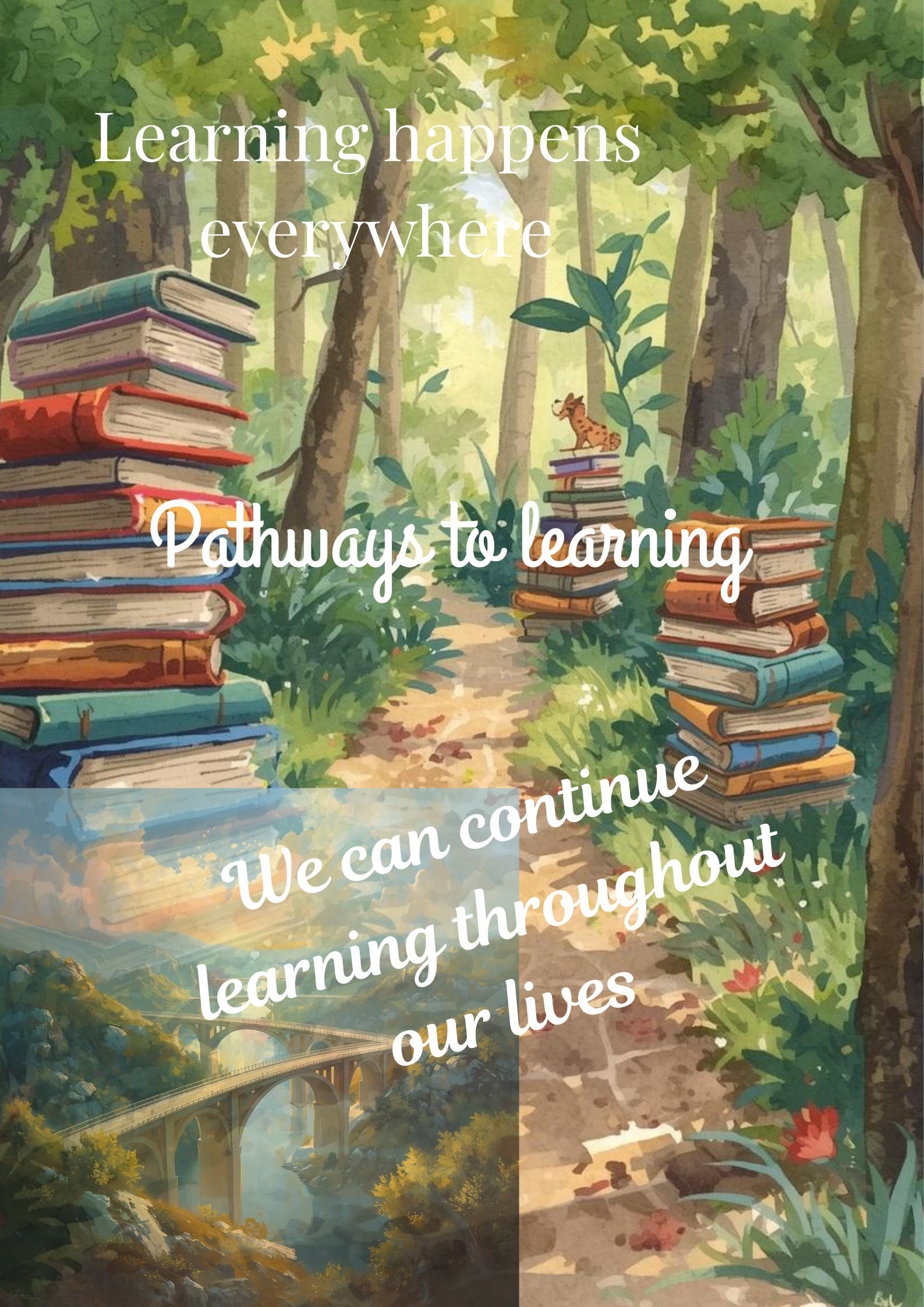
Much of my personal learning also comes through reading. Some of the authors whose work I return to often include Daniel Pink, Arthur Brooks, Caroline Leaf, and Daniel Amen. Each of them explores different aspects of human motivation, happiness, brain health, and personal development. Their ideas often spark new thoughts and reflections that shape the way I see the world.
Learning does not always happen in large leaps. Often it happens in small, steady steps.
Designing Your Own Personal Curriculum
One of the most empowering ideas in lifelong learning is that we can design our own personal curriculum.
Unlike school, where someone else decides what we must study, adulthood gives us the freedom to choose what we want to learn.
A personal curriculum simply means being intentional about what you are learning and why.
You might begin by asking yourself a few simple questions:
What topics genuinely interest me?
What skills would improve my life or work?
What areas of personal growth would I like to develop?
What knowledge would bring me greater confidence or understanding?
Your personal curriculum might include a mix of things such as:
Reading one meaningful book each month
Listening to educational podcasts during walks or commutes
Taking an online course
Learning a new language or skill
Attending workshops or lectures
Having regular conversations with people who inspire you
The goal is not to overload yourself. The goal is simply to remain curious and engaged with life.
A Simple Exercise: Your Learning Map
If you would like to design your own learning pathway, try this small exercise.
Take a piece of paper and divide it into three sections.
1. Things I Want to Understand Better
These might include topics like psychology, health, relationships, creativity, finance, or philosophy.
2. Skills I Would Like to Develop
Perhaps communication, writing, leadership, a new language, or creative skills.
3. Things I Am Curious About
These are the areas that simply spark interest — even if they are not immediately “useful.”
Once you have written a few ideas in each section, choose just one or two areas to explore over the next few months.
Remember, personal learning is not a race. It is a journey of discovery.
Reflection
Take a quiet moment to consider the following question:
What is something I have always wanted to learn, but never given myself permission to explore?
Often the only barrier to learning something new is the belief that it is “too late” or that we are “too busy.” Yet growth often begins when we give ourselves permission to be beginners again.
Learning keeps the mind active, the spirit curious, and life continually expanding.
Personal growth is not a destination we suddenly reach. It is a lifelong journey of learning, reflection, and small daily choices.
Some days we move forward confidently. Other days we pause, question ourselves, and begin again. Both are part of the process.
What matters most is that we keep learning, keep growing, and keep believing that change — however small — is always possible.
Final Thoughts
Personal growth is not about becoming a completely different person. It is about continually becoming a fuller version of who we already are.
Learning keeps our minds open and our perspectives fresh. It allows us to adapt, grow, and engage with the world in meaningful ways.
The pathways to learning are many, and they look different for each of us. Some people learn through books, others through conversation, experience, travel, creativity, or reflection.
The important thing is simply this:
Stay curious.
Stay open.
And keep learning.
Because when we continue learning, we continue growing — and that is one of the most powerful ways to truly live our best lives.
Living Your Best is a reflection series exploring continual learning, personal growth, and emotional well-being.